Seeing the signal is one thing, but acting on it is another.
When a role shows repeated 50+ hour weeks or steadily rising utilization, the first move isn’t to tell someone to “manage their time better.” That’s insensitive.
Instead, look at the shape of the work itself. What’s sitting on their plate that doesn’t have to? What keeps getting added without anything coming off?
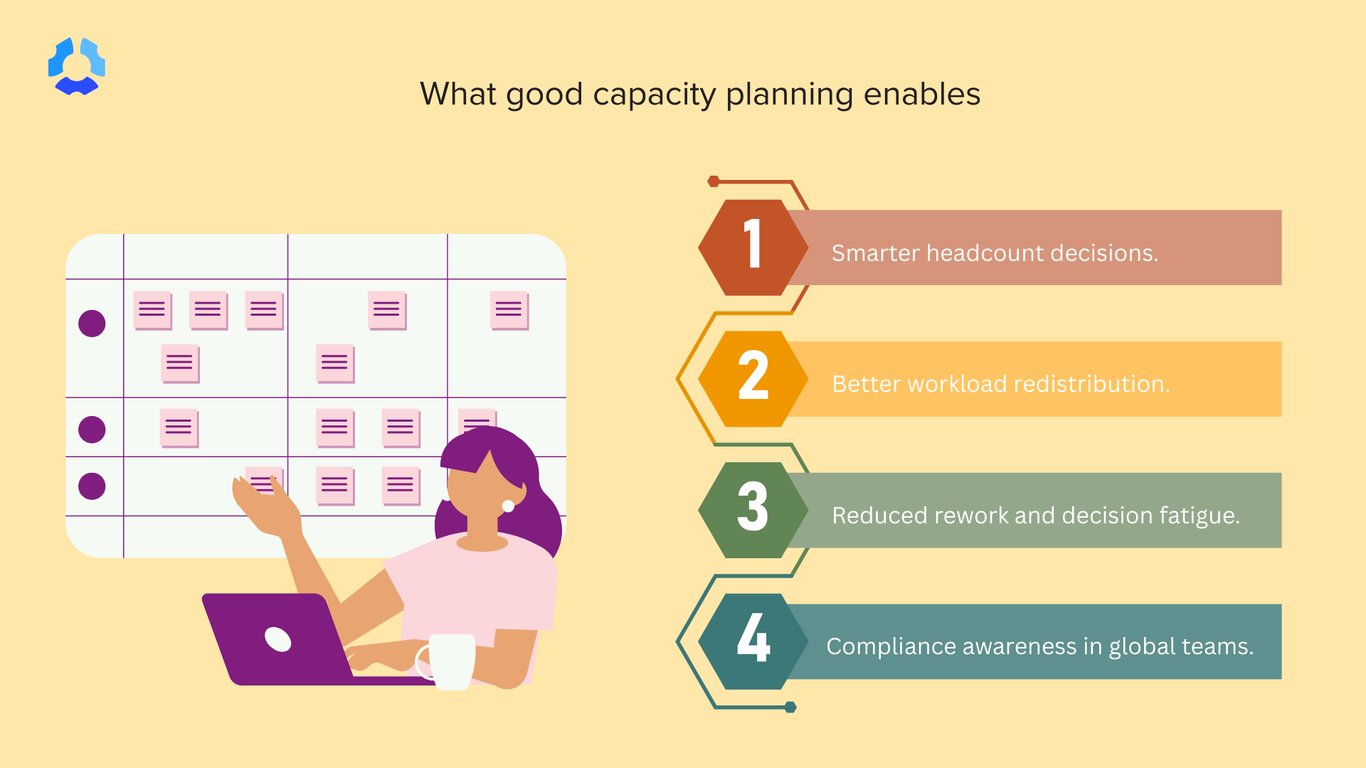
Often, the most immediate relief comes from redistribution. A manager who has slowly become the default problem-solver might offload operational tasks back to the team. A support lead carrying escalations every evening might rotate that responsibility instead of absorbing it indefinitely.
Capacity data makes those conversations less about personal work habits and more about structure. It shifts the focus from performance to design.
Sometimes, the right response is adjusting expectations. Deadlines that were set when demand was lighter may no longer be realistic. Roadmaps get sequenced differently. Or, perhaps lower-priority work can be paused instead of stealthily expanding the workday.
Or, the answer could already be inside the company.
There are usually teams inside the same organization that aren’t crossing 50+ hours. Look closely at how they operate.
Do they have clearer boundaries around after-hours communication or defined on-call rotations so responsiveness doesn’t become permanent availability? Maybe they perform cleaner handoffs between roles so managers aren’t stitching together work at the edges.
The key is perspective. A single intense week rarely demands a structural response, but patterns over time do.