How Agencies Can Leverage AI & Time Tracking to Increase Profits

 3 min read
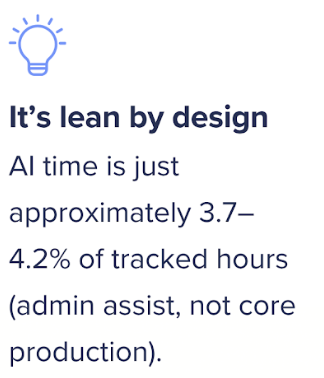
- 65–73% of agency teams use AI and 86% report productivity gains, yet only ~4% of logged hours are categorized as AI tasks — revealing a critical measurement gap hurting profitability.
- Agencies can't optimize what they don't measure; without tracking AI's indirect efficiency gains, capacity planning and profit decisions are based on incomplete, misleading data.
- Hubstaff connects time tracking, activity data, and workforce analytics to turn invisible AI-driven efficiency into measurable growth, helping agencies scale smarter without burning out teams.
Agencies are adopting AI faster than ever – using it for research, reporting, and client delivery. But according to time tracking data published in 2025 from Hubstaff’s More Profit, Less Burnout: How Smart Agencies Scale report, these productivity wins aren’t showing up where they matter most: in the timesheets.
This reveals a surprising gap in how agencies are tracking the real impact of AI.
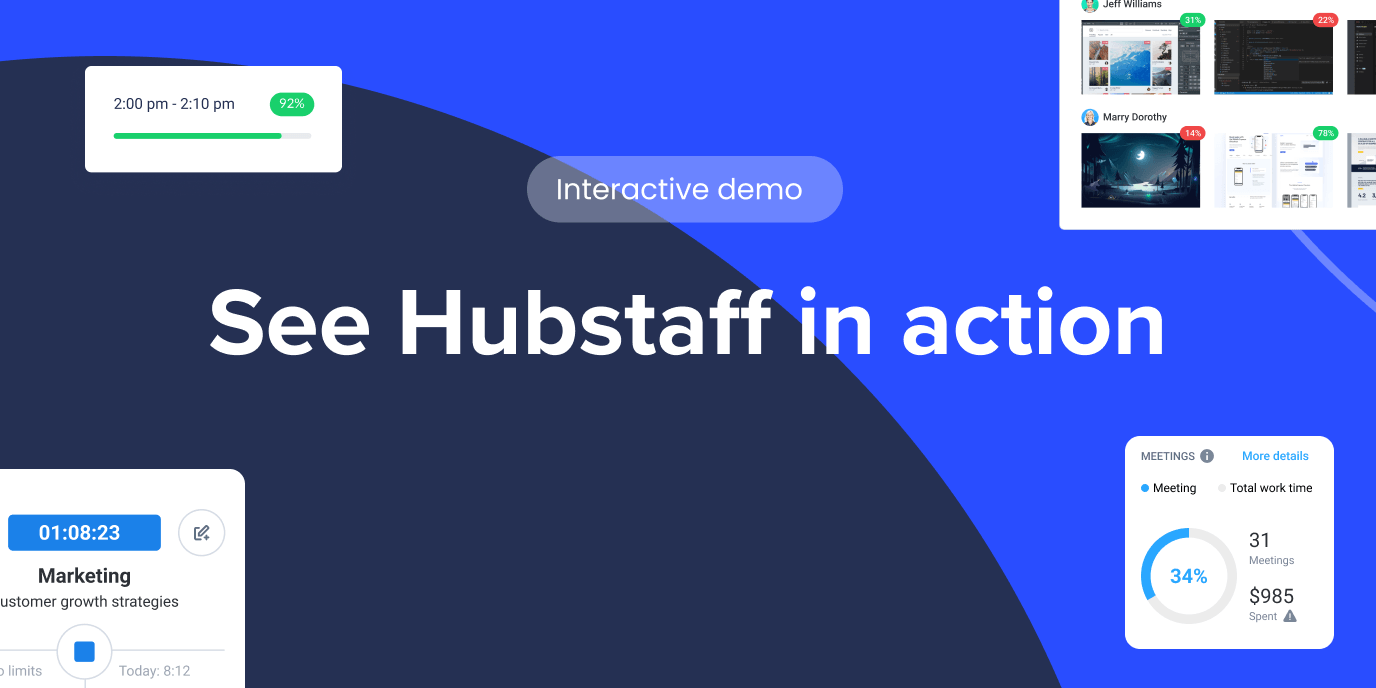
Hubstaff Walkthrough
Dive into our interactive demo and explore the features that make managing global teams easier than ever.
Widespread AI Adoption, Hidden in the Data
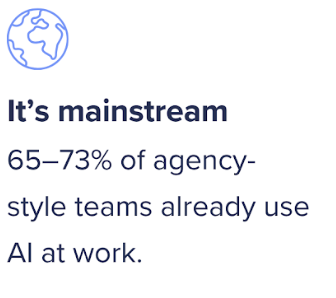
Findings show that 65–73% of agency teams already use AI, and 86% report measurable productivity gains.et time tracking data tells a different story – only around 4% of logged hours are categorized as AI-related tasks.
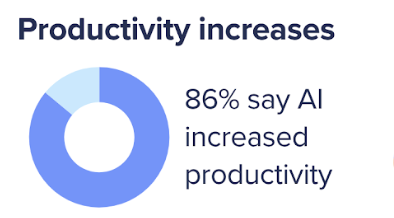
This disconnect suggests that agencies may be undercounting AI’s true contribution to efficiency. When AI speeds up workflows, but those time savings aren’t logged or analyzed, valuable data goes missing.
“Agencies are gaining hours every week with AI, but they’re not tracking those wins,” said Jared Brown, CEO of Hubstaff. “You can’t optimize what you don’t measure.”
The Measurement Gap: Agencies Need Smarter Time Tracking
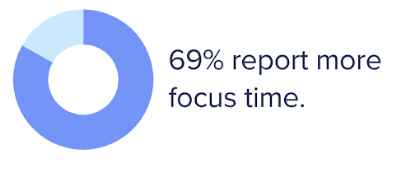
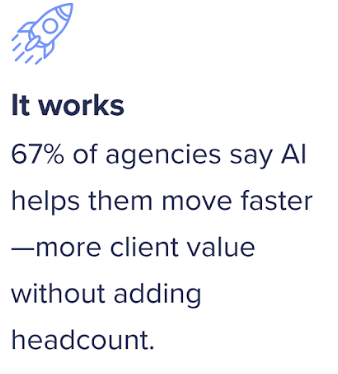
AI is freeing agency teams from repetitive work, helping 67% move faster and 69% focus better.
But most agencies still rely on traditional time tracking tools that can’t capture AI’s indirect efficiency gains.
That means operations leads and project managers are often planning capacity and profitability without seeing the full picture.
To stay competitive, agencies need more than basic timesheets. They need time tracking software that connects activity data, focus patterns, and app usage – allowing them to measure where AI is truly making an impact.
Why Visibility Matters More Than Ever
In agencies, every billable hour counts. But as AI becomes embedded in daily workflows, leaders must understand how work is getting done — not just how long it takes.
That’s where Hubstaff’s time tracking software with built-in productivity monitoring, workforce analytics, and automated payments comes in.
Hubstaff helps agencies turn invisible efficiency into measurable growth.
By tracking time accurately and surfacing where AI reduces manual effort, agencies can:
- Improve capacity planning
- Identify automation opportunities
- Increase profit margins without burning out their teams
When agencies make time visible and predictable, they can connect AI-driven productivity gains to actual capacity, turning invisible efficiency into measurable, scalable growth.
Get the full report and learn how to get more profit and less team burnout
Hubstaff’s How Smart Agencies Scale report explores how top-performing teams are balancing AI productivity gains, improving resource visibility, and driving profitability in the age of automation.
This research builds on Hubstaff’s earlier findings from The AI Productivity Shift and Workstyle Revolution: Debunking Myths and Unlocking Distributed Team Potential.
Read the full report to learn how your agency can scale smarter, not just faster.
Most popular
The Top Time Management Statistics in 2026 for Workplace Productivity
We all have the same hours in the day. But when employees struggle to focus, those hours likely won’t be used effectively. Witho...
The Best Coaching Conversations Start With Productivity Data
Most coaching conversations happen too late. A deadline is missed, or a client flags a problem, and then a manager schedules a sit...
A Quick Guide to Work Order Management
From quick fixes to long-term stability, work orders are crucial to asset management and helping managers keep operations running...
How to Identify High Performers Using Work Patterns
Every business has top performers, and managers are told to find them all the time. But in most cases, they default to approaches...
![How to Use Time Blocking to Make 2024 Your Most Productive Year Ever [Free Template]](https://hubstaff.com/blog/wp-content/uploads/2018/12/time-blocking@2x-780x390.png)