Basic productivity formula
The basic productivity formula is simple yet reliable for understanding how effectively your team is working. Use this to calculate productivity:
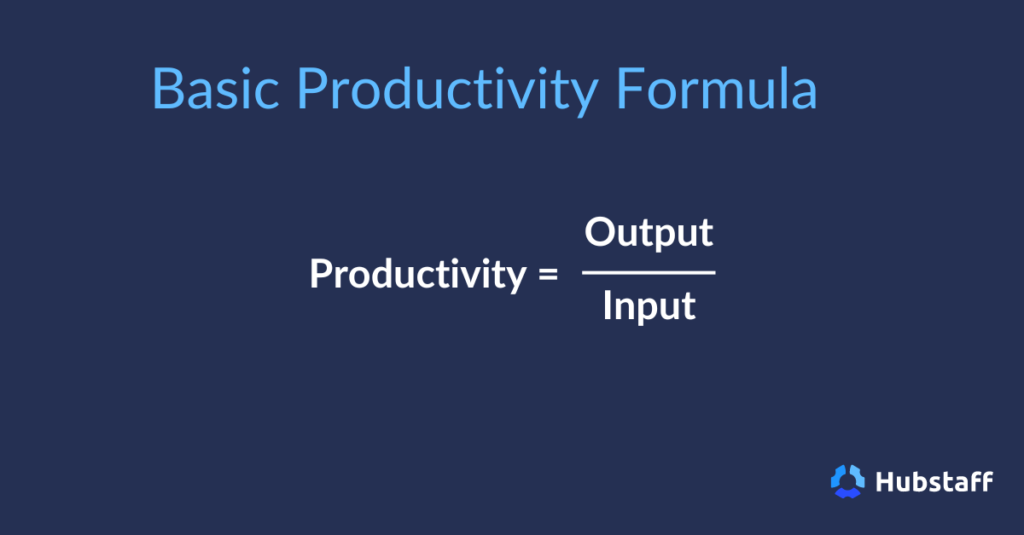
Productivity = Output / Input
This formula helps businesses track employee productivity by providing a clear ratio between the output generated and the input used.
For example, if you want to calculate productivity based on units produced per hour worked, you might measure the total number of units produced by an employee and divide that by the total hours worked.
- Output: 100 units produced
- Input: 20 hours worked
Productivity = 100 units / 20 hours = 5 units per hour
This formula helps you understand your team members’ efficiency and identify areas where you can improve productivity.
Employee productivity rate formula
Another essential formula for assessing workforce productivity is the employee productivity rate formula. This formula is particularly useful for understanding productivity over longer periods and across teams.
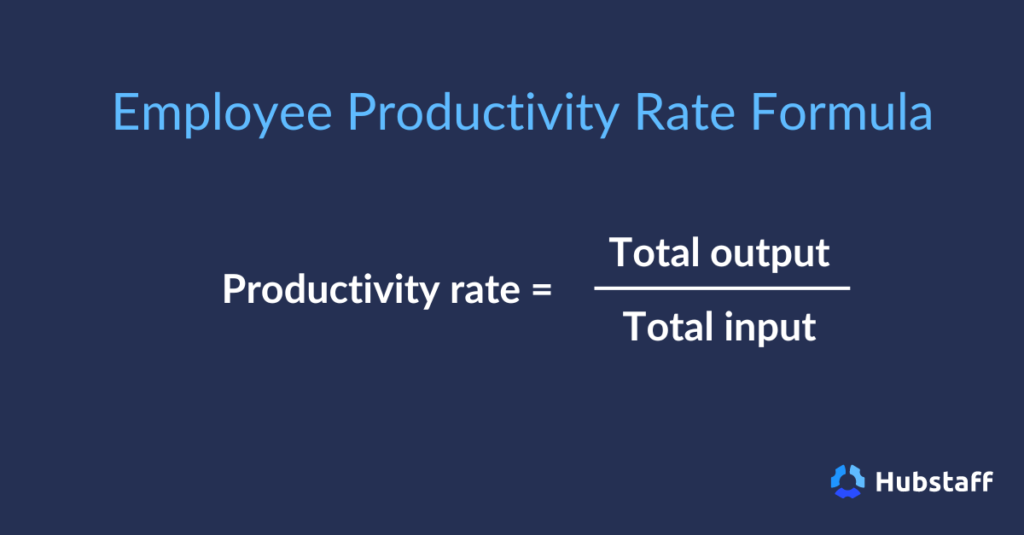
Productivity rate = Total output / Total input
This basic formula allows you to evaluate a team or department’s overall productivity by comparing the total output generated to the total input used over a specific period.
- Total output: 2000 units produced in a month
- Total input: 500 hours worked by the team
Productivity = 2,000 units / 500 hours = 4 units per hour
By calculating the productivity rate for bigger periods of time, businesses can set target productivity goals and monitor progress toward them.
Labor productivity per employee formula
The labor productivity formula identifies an organization’s productivity on a per-employee basis. This formula helps assess the average productivity of employees within a department or across the entire business.
Labor productivity = Total output / Number of employees
This formula provides a clear view of the average output each employee contributes. It also makes it easier to calculate employee productivity and compare it across different departments or teams.
Example:
- Total output: 5,000 units produced in a quarter
- Number of employees: 50 employees
Labor productivity = 5,000 units / 50 employees = 100 units per employee
The labor productivity formula helps businesses determine the efficiency of their workforce. This metric can identify both strengths and weaknesses in an organization’s productivity.
Productivity per employee formula
The productivity per employee formula measures each employee’s financial contribution to the organization. This formula helps businesses see employee productivity by focusing on the revenue generated per employee.
Productivity per employee = Revenue / Number of employees
This formula provides a clear indicator of how much output each employee generates in financial terms, making it a valuable tool for assessing overall profitability.
Example:
- Revenue: $1,000,000 in a year
- Number of employees: 100 employees
Productivity per employee = $1,000,000 / 100 employees = $10,000 per employee
Regularly measuring productivity helps companies develop actionable strategies to increase productivity.
Employee productivity ratio formula
The employee productivity ratio formula can be used to compare productivity across different teams or periods. It’s helpful for organizations that want to measure employee productivity consistently.
Productivity ratio = Output / Input ratio
This formula is straightforward: divide output by the input ratio and use the results as comparison benchmarks.
Example:
- Output: 1,500 units produced
- Input: 300 hours worked
Productivity ratio = 1,500 units / 300 hours = 5 units per hour
The productivity ratio offers valuable insights into how efficiently different teams or departments perform — especially when dealing with repetitive tasks.
Employee productivity index formula
The employee productivity index formula is a powerful metric for tracking changes in productivity over time. By comparing current productivity to a base period, businesses can track performance trends and the impact of various campaigns.
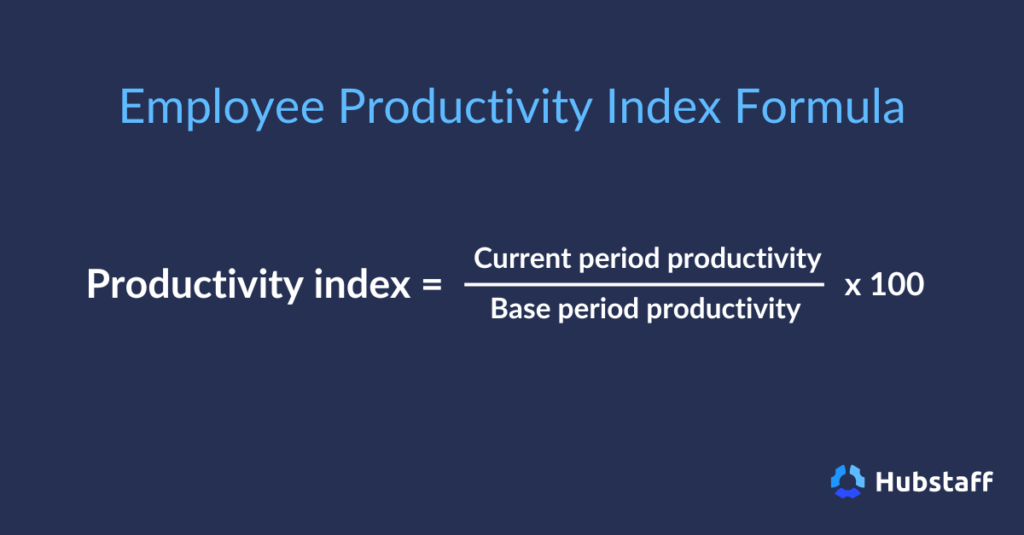
Productivity index = (Current period productivity / Base period productivity) x 100
This standard productivity formula lets organizations measure relative productivity changes across time periods, whether improvements or declines.
Example:
- Current period productivity: 12 units per hour
- Base period productivity: 10 units per hour
Productivity index = (12 / 10) x 100 = 120%
A productivity index of 120% indicates a 20% improvement in productivity compared to the base period. This metric can help businesses identify the effectiveness of their strategies, such as training and development opportunities or initiatives for employee engagement and a more positive work environment.