6 Hacks for Finding Remote Jobs in 2024

 14 min read
- Remote job searching works best as a structured project — use checklists, tracking spreadsheets, and project management tools to organize outreach, monitor applications, and prioritize the strongest opportunities.
- Getting ahead means applying early: set up alerts via Google Alerts or similar tools and target low-traffic boards and niche platforms to face less competition than on mainstream job sites.
- Strategic networking and cold outreach — focused on existing contacts and personalized value-driven pitches — can unlock hidden roles not publicly advertised on traditional job boards.

If you work in tech, you already know that finding remote work can be difficult. Even though remote working has increased drastically since 2020, there still aren’t enough positions for all employees seeking a remote career.
The internet has made job searching much easier, but among the thousands of job postings you can find online, remote jobs are still a rare find.
However, if you adjust your job search techniques, you’ll find that quite a few companies are willing to work with remote teams, even if they don’t seem to be looking for help or aren’t advertising their openings.
This post will show you how to find a remote job with detailed examples for job seekers. These strategies can help you increase the chances of finding a remote job that fits your skill set. Let’s get started.
Stay in the loop
Subscribe to our blog for the latest remote work insights and productivity tips.
Things to consider before you begin your remote work search
You may be excited to start looking for remote jobs, but it requires careful planning and decision-making to job search effectively.
Are you willing to work hybrid?
The rise of hybrid work is undeniable as organizations across industries embrace flexible work models. Fueled by technological advancements and a changing perspective on work-life balance, employees are increasingly seeking a blend of remote and in-office work. This shift has been expedited by the global events of recent years, prompting companies to reevaluate traditional office-centric structures.
The advantages of hybrid work, such as increased employee satisfaction, enhanced productivity, and access to a broader talent pool, contribute to its growing popularity. As businesses recognize the benefits of flexibility, many are adopting hybrid work policies to create a dynamic work environment accommodating remote and on-site collaboration.
This transformative approach is reshaping the future of work, offering employees the autonomy to balance professional and personal responsibilities while maintaining effective teamwork.
Decide if you are looking for full-time or freelance work
To get started, you’ll need to decide whether you want to take a freelancing/contract position that might include everything from doing a few hours once to doing 40 hours (or more) a week for the long term versus taking an employee position.
In most cases, you will find it easier to secure freelancing work. Still, remote positions are increasing as companies adapt to remote trends and transition to more remote-powered teams.
What salary do you need, and are benefits a priority?
Although salary negotiations typically come during the interview phase, it’s still essential for you to determine how much you will be asking for your services. You can try looking up average salaries based on years of experience for the positions you are considering to get an idea. If you’re wondering how remote vs. office positions differ, don’t worry. There’s no shortage of remote jobs that pay well.
The number of benefits you can have differs from one employer to another. However, you can get an idea of whether or not a particular company offers benefits based on their sites and job listings, so be sure to give them a look.
You’ll find that many companies in the digital and marketing industries offer many additional benefits. Home office budgets, personal development budgets, additional vacation funds, book funds, Starbucks gift cards, and team retreats, to name a few.
Tech companies, in particular, try to offer unique perks to entice new applicants. Decide what is important to you, and if you need all of the additional bonuses, then keep them in mind as you find places to apply.
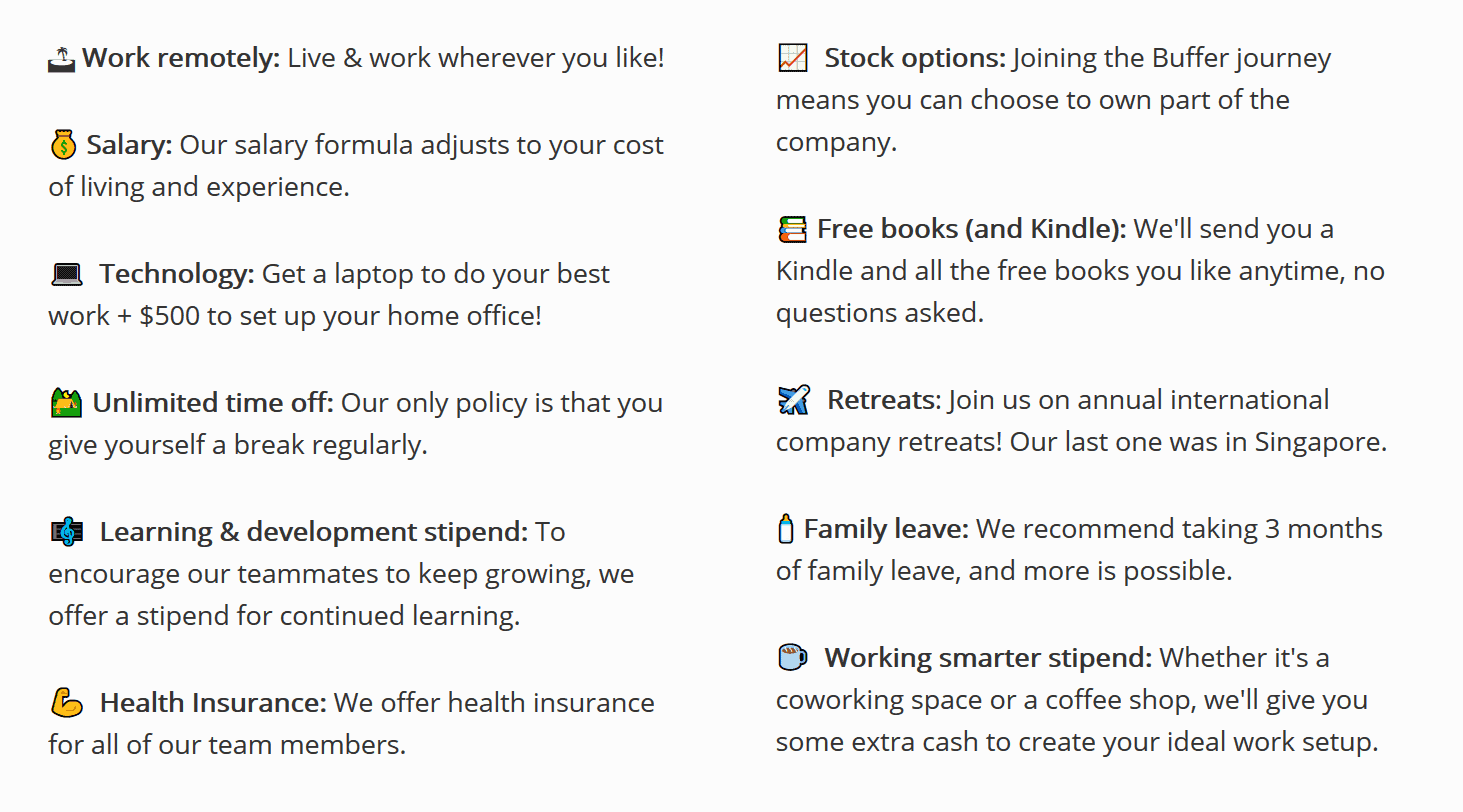
For example, here are some of the benefits of working with Buffer:
Get training if you feel you need it
If you need to develop your skills for the position you are aiming for, there are many free courses you can take online to help you learn what you need for your desired job.
Codecademy and freeCodeCamp can teach you how to code for free. Platforms like Skillshare, Coursera, and Udemy have vast selections of courses in everything from Adobe Photoshop to presentation skills. Be sure to take advantage of all opportunities to add to your skills.
Your resume should be perfect for the job
Your resume should include work related to the positions you want to accept. For instance, if you want to be a marketer, your resume doesn’t need to have your experiences in completely different fields. You can take that cashier job off the list.
Since you’ve made a list of positions you want to apply for, it’s recommended that you create a version of your resume for each position. At the very least, tailor your cover letter or introduction to the job you’re applying to as it shows your interest.
Speaking of cover letters, you’ll have to write a cover letter every time you send an application. Remember that it’s better to make your letters as personalized as possible; sending out a single pre-written draft for all your applications will not be successful. You could also prepare cover letter templates that you could customize depending on the recipient before sending them out.
Stay productive while working remotely
Time tracking made simple with Hubstaff

1. Networking to find work
Everyone says to tap your network to find open positions and that it’s all in who you know. It’s true, but no one tells you how to do this, and many of us have a lot of anxiety about it. Here’s how you can get started.
Who should you contact?
Who should you contact for job search support? People with whom you have a comfortable relationship. These are people you’ve had casual conversations with, emailed or chatted multiple times or connected with in some other way.
Avoid connecting with people who don’t know you, as you’re less likely to get a response for your efforts. It will be a waste of time, and you’ll burn bridges before they are even standing. Only reconsider if you’re confident you can make a decent approach with someone.
Where to find people to contact:
- Linkedin connections
- Email contact list: in Gmail, emails you respond to are saved as contacts, so you have a lot of possible connections.
- Slack channels
- Twitter and direct messages
- Facebook groups or private messages
- Community sites: Inbound, GrowthHackers, HackerNews
Here is a sample of a basic template:
Hi Chris,
How are you? I hope I’m not bothering you, but I wanted to let you know I’m looking for a new position (in industry or as a position). I was wondering if you knew of any openings we could chat about. Either way, I’d love to catch up.
Thanks,
John Smith
Once you get a lead, send them your resume. In your cover letter, mention the person who referred you to the position.
Here are a few more tips for your messages:
- Ask about their business, projects, or position
- Refer to an earlier discussion
- Think of how you can help them and talk about it
- Make it easy for them to refer you to another company
- Be short; always err on the side of being too short. No one has time to read long emails.
2. Research remote-friendly companies
Even as some businesses shift from a remote to a hybrid work schedule, some remote companies publicly state that they plan to be remote-first permanently. If you’re looking for a remote job, it’s essential to keep in mind all the companies that are remote-friendly.
Many companies might hire remote workers to do specialized jobs, but working with an entirely remote team means you aren’t the odd one out.
When researching remote-friendly companies, consider the following practical tips and examples:
- Review company policies: Look for companies that have clear remote work policies. Check their official websites or employee handbooks for information on flexible work arrangements, remote work options, and telecommuting policies.
- Search remote job sites: Take note of the companies that offer work-from-home jobs and list job postings for remote positions, and keep a list of them for future reference.
- Read employee testimonials: Read reviews on platforms like Glassdoor to gain insights into employee experiences regarding remote work. Positive reviews about a company’s remote-friendly culture can be a good indicator.
- Double-check job descriptions: Pay attention to how companies structure their job listings. If they consistently mention remote work options, it’s a positive sign. Some companies may even have a dedicated section on remote job opportunities.
- Study industry reports and rankings: Consult industry reports and rankings highlighting remote-friendly companies. Organizations like Forbes and Fortune often compile lists of companies with strong remote work cultures.
By combining these strategies, you can identify companies that align with your preference for remote work and increase your chances of finding suitable opportunities within those organizations.
Remote-friendly companies
Here are a few of our favorite remote-friendly companies to get you started on your search.
- Hubstaff
- Buffer
- GitLab
- Zapier
- InVision
3. Search for unadvertised positions
Several companies help businesses manage hiring through an online dashboard that captures applicant information, making it much easier for hiring managers to handle applications.
You’ve probably seen these sites:
- BambooHR
- Zoho Recruit
- Workable
- Jobvite.com
- Recruiterbox.com
The problem (for you) is that you need help to search their sites for positions, yet they are full of great jobs that need to be filled. So this is what you do:
Use Google to find hidden remote positions
Go to google.com and type this in for your search:
site:zoho.com + (position, remote, or industry)
for instance: site:zoho.com remote marketing
Most popular
A Quick Guide to Work Order Management
From quick fixes to long-term stability, work orders are crucial to asset management and helping managers keep operations running...
How to Identify High Performers Using Work Patterns
Every business has top performers, and managers are told to find them all the time. But in most cases, they default to approaches...
The AI Productivity Panel: Lessons From Leaders on What’s Working (and What’s Not)
When I moderated this AI productivity panel, I expected a solid conversation. What I didn’t expect was the flood of real-world i...
Ask Your Workforce Data Anything with Hubstaff’s New AI-Ready CLI and API
It’s Monday morning. Your CEO asks, “Which projects went over budget?” Instead of pulling reports, exporting numbers, and ve...