AI in employee engagement: beyond surveys and guesswork (Micromanaging or driving trust?)

 7 min read
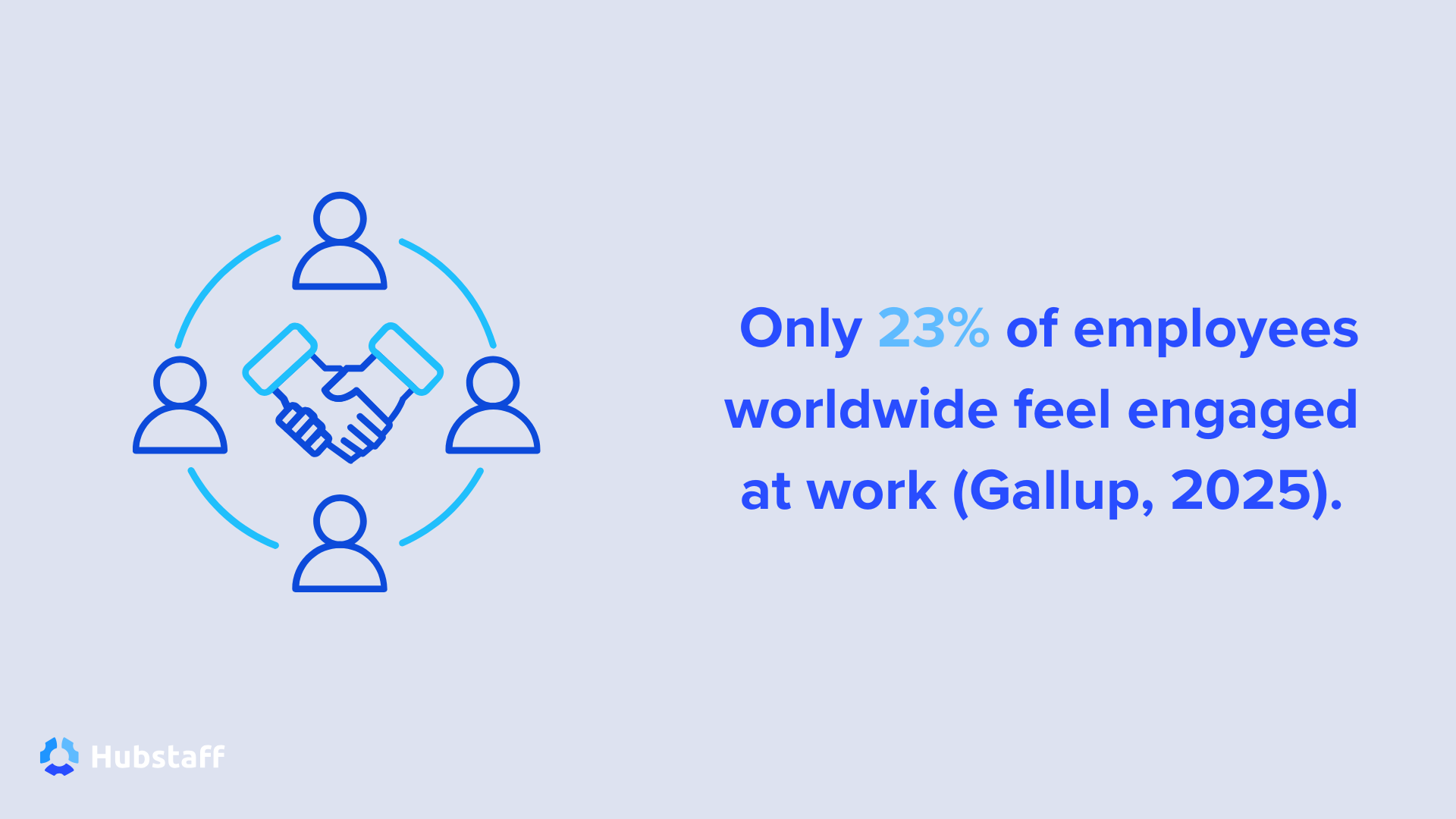
- Only 23% of employees feel engaged at work — AI changes that by analyzing behavioral patterns like workload and collaboration to surface burnout risks before they become resignations.
- Ethical AI engagement means transparency and coaching, not control — 56% of remote workers report monitoring-related stress, so sharing insights openly builds trust instead of eroding it.
- Hubstaff helps teams shift from reactive guesswork to proactive engagement, giving managers real-time signals to act on before disengagement turns into costly turnover.

AI in employee engagement is shifting from buzzword to business strategy. Yet while most companies rely on surveys, perks, and gut feel to understand their teams, engagement is still at an all-time low, with only 23% of employees feeling engaged at work.
What if AI could change that? Not by tracking every move, but by revealing the signals that matter: patterns of burnout, collaboration gaps, and early signs of disengagement.
In this guide, we explore how AI can enhance trust (not micromanage) and help organizations move from reactive guessing to real-time support. Let’s get started.
Stay in the loop
Subscribe to our blog for the latest remote work insights and productivity tips.
Why employee surveys and guesswork fall short
Employee engagement is one of the most talked-about workplace priorities, and one of the most underrated. Many organizations still rely on annual surveys, occasional pulse checks, or manager intuition to gauge how employees feel.
But creating a thriving workplace culture is built on experience, not frequent check-ins.
The result is a scattered, delayed view of engagement that often misses real issues until it’s too late, especially in remote-first and distributed teams where visibility is already limited.
Only 58% of employees seek more frequent engagement surveys. This indicates that even when surveys exist, employees often feel they’re not timely or relevant enough to capture their ongoing experience.
At the same time, employees consistently report skepticism about whether their feedback leads to meaningful change, undermining the value of traditional surveys before they’re even completed.
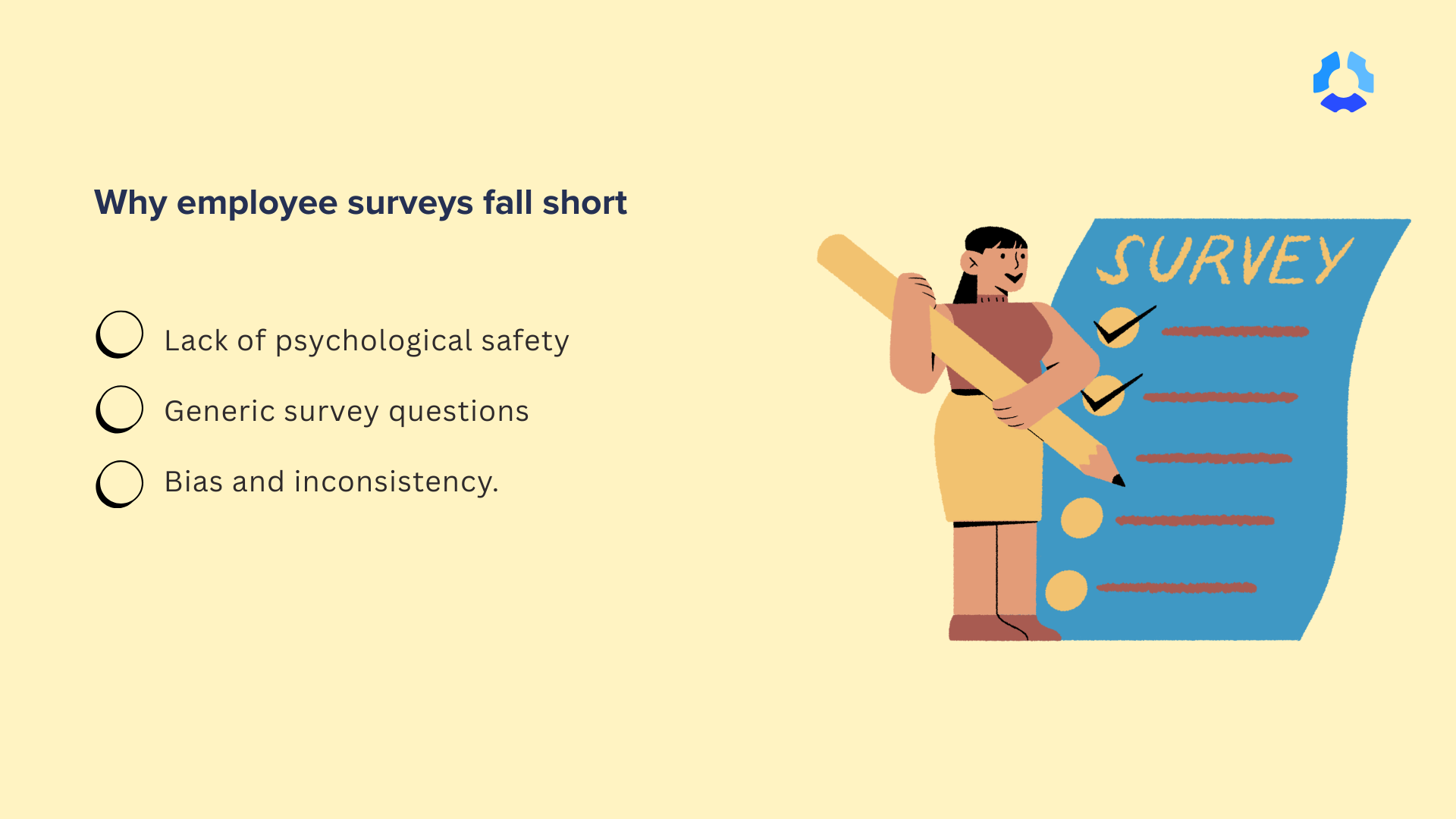
These approaches fall short for several reasons:
- Not feeling psychologically safe. Employees may hesitate to provide honest feedback if they’ve been given poor indications of psychological safety like questioning confidentiality or fearing negative consequences.
- Infrequent pulse check. Annual or quarterly surveys capture feedback once a year, missing feedback as it happens, and making it difficult to make adjustments on the fly.
- Generic questions. Generic survey questions often fail to address role-specific challenges, especially in modern distributed work environments.
- Lack of follow-through. When employees don’t see visible action taken on feedback, trust erodes and participation declines.
- Intuition-based actions. When managers rely on “gut feelings,” they lead to bias and inconsistency.
This gap has opened the door to AI workforce analytics as a new lens for understanding engagement. But it also raises a critical question organizations must answer carefully:
Is AI being used to empower teams with better insights or to enable micromanagement?
That distinction will define whether AI becomes a tool for trust and performance, or another reason employees disengage.
What does AI in employee engagement actually mean?
AI in employee engagement uses predictive models to analyze behavior, sentiment, and performance data. This helps in spotting burnout risk, identifying trends, and personalizing support or training that keeps teams motivated and connected.
Many companies still struggle to act on employee feedback in meaningful ways, not due to a lack of intent, but because they’re relying on outdated, reactive methods that don’t scale.
Managers are often left guessing how their teams feel until disengagement shows up in performance, turnover, or burnout. Several factors affect employee engagement, starting from job satisfaction to sense of purpose to recognition.
The role of AI in employee engagement is understood and addressed, but it’s often misunderstood.
Let’s be clear:
- AI in engagement is not employee surveillance
- It doesn’t replace managers or human connection
- It doesn’t rely on personal or private data
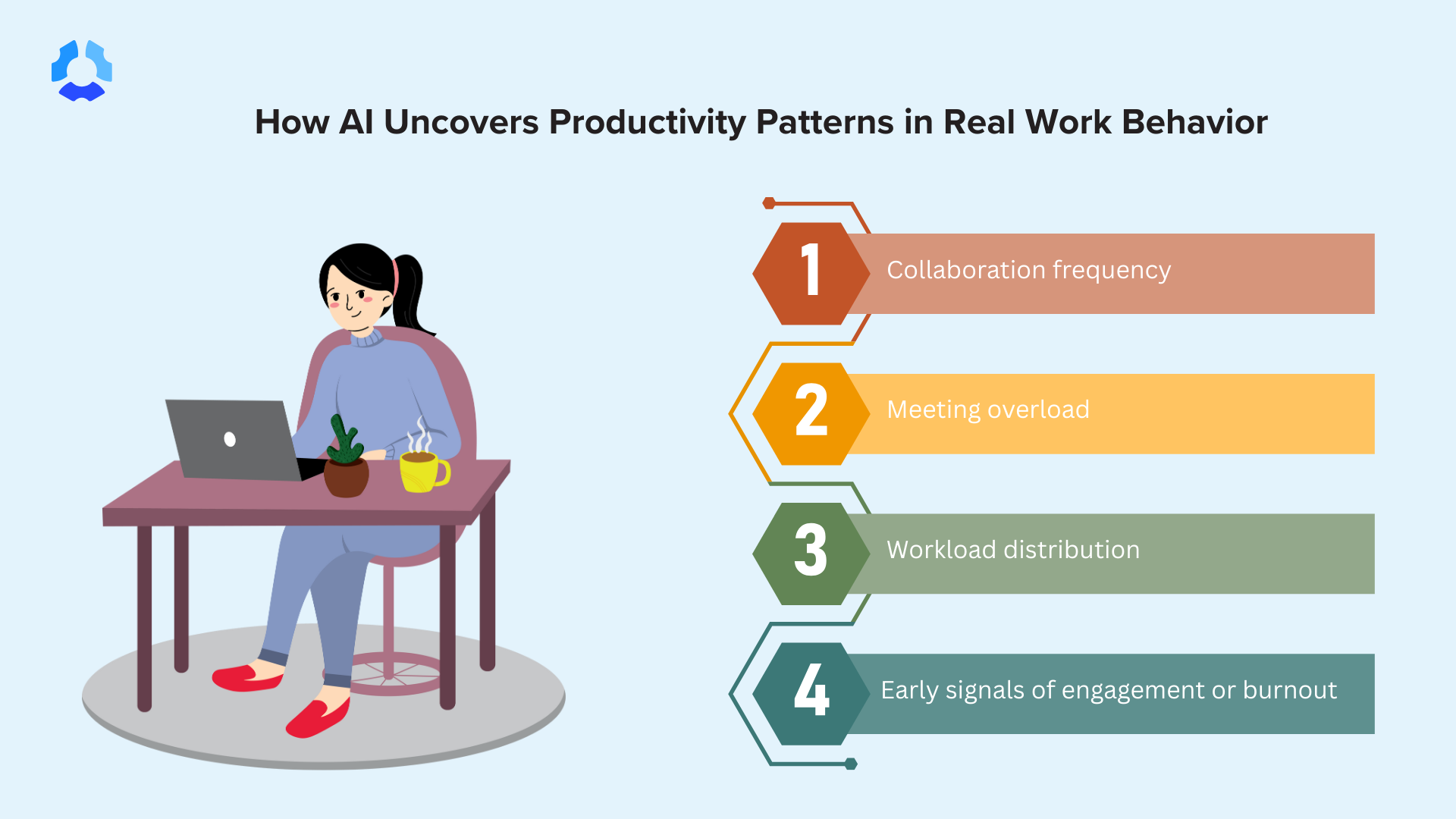
In reality, AI helps analyze patterns across work behaviors, including:
- Collaboration frequency
- Meeting overload
- Workload distribution
- Response patterns
- Early signals of engagement or burnout
Here’s what the best AI tools for employee engagement can actually do:
- Recognize engagement signals at scale. AI can spot patterns like declining collaboration or imbalance in workloads, long before they escalate into bigger issues.
- Surface insights managers may miss: With limited face time and asynchronous schedules, AI fills the visibility gap by identifying team-level and individual trends.
- Enable proactive, data-driven support: Instead of waiting for a survey to confirm disengagement, AI helps teams respond early with tailored coaching, workload balancing, or recognition.
At its best, AI in engagement is about personalization, making every employee feel seen, heard, and supported in real time. All this without filling out a single form.
Micromanagement vs Trust: Where AI goes wrong
Without transparency, AI-powered tools often lead to over-monitoring, misused metrics, and a lack of context, undermining trust rather than building it. In fact, 56% of remote employees report stress and tension due to monitoring, often fearing punishment rather than support.
These employee concerns stem from:
- Anxiety and disengagement due to over-monitoring
- Lack of clarity is damaging transparency and morale
- Distorted performance based on AI-driven metrics without human context
There’s a fine line between micromanagement and trust. The problem isn’t AI itself, but how it’s applied. Without the right safeguards, a time tracking tool like Hubstaff can feel like surveillance when it’s actually built to empower employees, provide workload visibility, and increase efficiency.
That’s why companies must commit to the ethical use of AI in the workplace. It’s about using employee productivity insights to support, not scrutinize, and empower, not control.
Organizations that prioritize productivity monitoring software to empower distributed teams, not control, will win. Moreover, leaders need to collect employee feedback before rolling out monitoring tools, so they feel included. When AI is implemented with clarity and care, it can become a tool for trust, not a trigger for fear.
How AI can build trust when used correctly
One of the biggest concerns employees have with AI in the workplace is a lack of transparency. In fact, recent research shows that while employee experience is a top priority for most organizations, only 51% of employees feel their organization delivers.
When AI is used without explanation or context, it can feel intrusive and punitive. But when implemented with complete transparency and intention, AI can reinforce rather than replace.
That’s why the core principles behind time tracking software like Hubstaff are often built on values that help businesses and employees work together to create a productivity monitoring experience that is mutually beneficial.
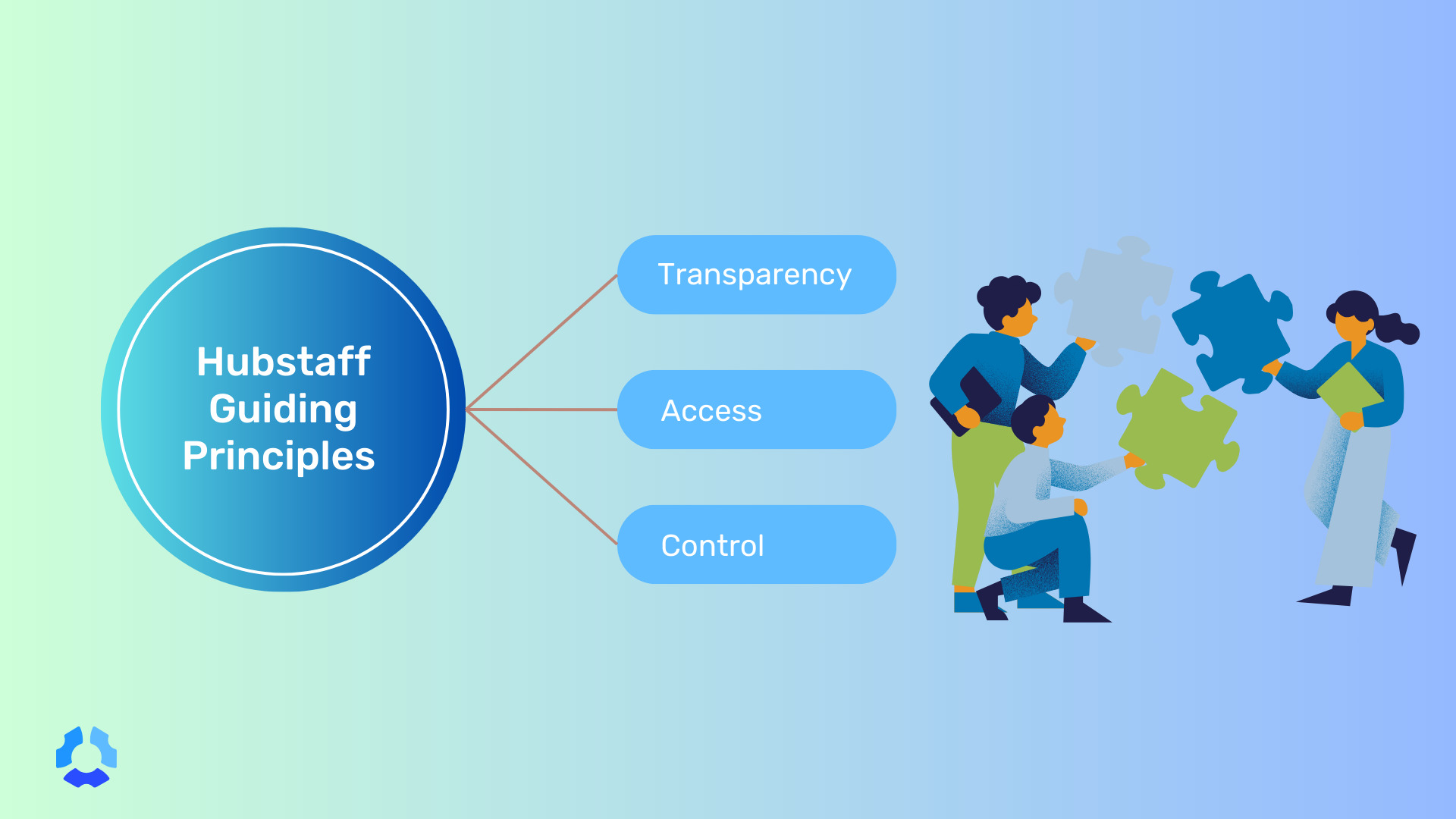
At Hubstaff, we follow these three guiding principles:
- Transparency. Hubstaff’s goal is to empower remote and hybrid work by giving users the tools to foster trust from a distance — not micromanage and over police.
- Access. Everyone has visibility. Insights are shared, not siloed, so individual contributors and managers can access and learn from their own time data.
- Control. Our tools are built to empower, not micromanage. The goal is coaching over control, and optimizing for impact, not just activity. Customizable permissions allow managers to customize Hubstaff to suit their managerial style and compliance needs.
Rather than relying on constant oversight, Hubstaff uses AI-powered workforce productivity analytics to surface team-wide patterns, helping managers spot risks such as burnout or imbalance. At the same time, employees feel more ownership of their time and outcomes.
That’s what the ethical use of AI in the workplace looks like: clear, contextual, and built to foster trust.
Real-time engagement signals that AI can reveal
Traditional engagement tools miss the everyday patterns that signal whether a team is thriving or quietly burning out. AI can surface real-time signals that help managers respond before issues escalate.
AI can reveal:
- Unbalanced workloads that lead to burnout or quiet quitting
- Sustained drops in activity that suggest disengagement
- Reduced collaboration across tools or teams
- Shifts in productivity rhythms (i.e., erratic work hours)
- Pre-resignation signs, including decreased task ownership or time tracked
At Hubstaff, we’ve seen that early warning signs of disengagement and burnout can be seen in data such as reduced focus time, low activity levels, work time distribution, utilization, and drops in team collaboration. These are metrics that Hubstaff Insights add-on surfaces in real time.
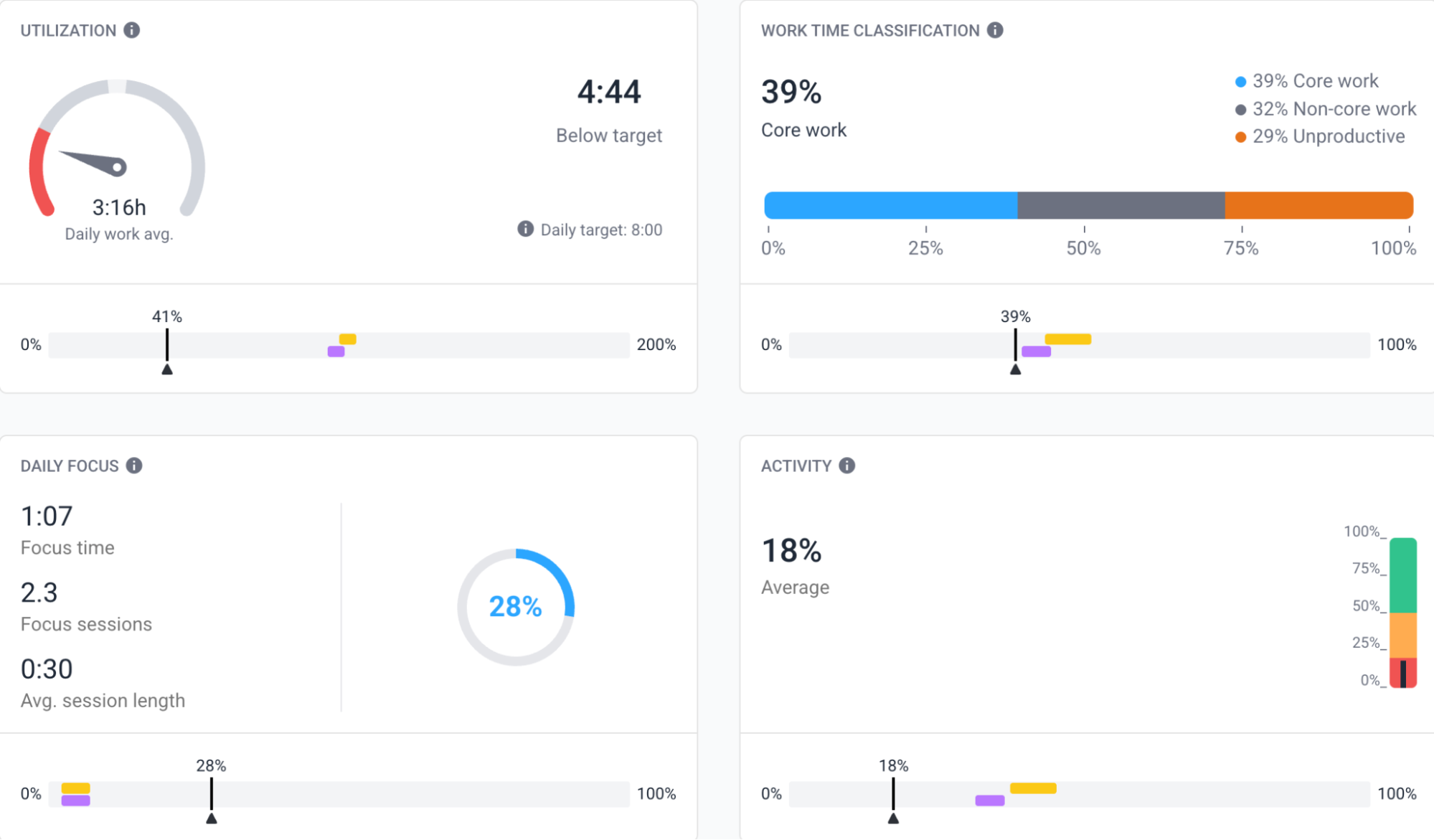
These insights empower leaders to take proactive action, improving workflows and team morale without relying on surveys or assumptions.
Best practices for ethical AI in employee engagement
Ethical use of AI starts with intention and is sustained through transparency and accountability. At Hubstaff, we believe AI should never replace human judgment, but instead provide the correct data at the right time to drive better conversations. Leaders should use data to improve performance, not to flawfind.
Here’s a simple framework for ethical AI use:
- Be transparent about what’s tracked, why, and how data is used
- Use AI to open conversations, not to draw conclusions
- Combine insights with human context before taking action
- Set clear boundaries — what’s not tracked is just as important
- Audit AI systems regularly to avoid bias or misuse
When teams understand the “why” behind the data, AI becomes a tool for support, not surveillance.
The future of employee engagement is continuous, not reactive.
Annual surveys can’t keep pace with the speed and complexity of modern work. Engagement is fluid, and capturing it once a year means missing critical moments that shape employee experience.
AI now gives managers the ability to listen in real time, detecting early signs of burnout, disengagement, or imbalance as they happen, not after damage is done. Modern AI-driven engagement platforms go beyond outdated systems, using smarter, adaptive technology to enhance how teams connect and thrive.
Instead of relying on lagging indicators, AI enables leaders to:
- Identify friction or fatigue as it surfaces
- Deliver timely support, not delayed reactions
- Strengthen trust through data-informed, empathetic conversations
When employees feel heard in real time, not months later, organizations see measurable improvements in retention, culture, and team resilience.
This evolution starts with using the right workforce management metrics, those that surface engagement signals continuously and help leaders act before issues escalate.
FAQs
- How can AI boost employee engagement?
AI can reveal employee engagement trends in real time by analyzing workflows, disengagement patterns, and collaboration gaps. Managers can use this data to balance workloads and proactively support their teams.
- Is AI better than employee engagement surveys?
It’s not either/or, as both serve unique purposes and pair well together. AI complements surveys by providing continuous visibility between check-ins and capturing what traditional methods often miss.
- Will AI replace HR staff or other employees?
It’s unlikely that AI will replace HR staff, as it’s a tool for efficiency, not a replacement. Artificial intelligence augments HR and manager decision-making by surfacing insights that require human judgment and empathy.
- Is there an ROI when using AI for employee engagement?
Yes. AI-powered engagement strategies deliver ROI (Return on Investment) by helping prevent burnout, reduce turnover, and boost productivity, which can lead to measurable cost savings and stronger team performance.
Go beyond guesswork and move toward trust
AI has the potential to reshape employee engagement, not through surveillance, but through clarity, fairness, and real-time insight. When used with transparency and care, AI builds trust by surfacing what really matters: how people are working, collaborating, and feeling day to day.
At Hubstaff, we’re building toward this future, where AI-powered time and productivity tracking features will help teams move from reactive, guesswork-based engagement to proactive, trust-based engagement.
Most popular
7 Tools That Help Monitor AI Usage at Work in 2026
AI is everywhere. Adoption continues to grow, but from monitoring AI usage, we’ve learned that daily use is still a mixed bag, a...
Hidden AI Usage in the Workplace: What Your Tools Don’t Tell You
How much has AI changed your team’s work? On the surface, work might not look that different. The meetings are still there, docu...
How Many Meetings Are Too Many? 2026 Benchmarks by Role
How many meetings are too many? In 2026, the honest and boring answer is: it depends on your role. Our 2026 Global Trends and Benc...
When Evening Work Becomes a Red Flag: How to Fix Triple-Peak Overload with Smarter Core Hours (2026 Data)
Most people don’t remember the first time they worked in the evening, and even fewer people know when the last evening work sess...