How Much Deep Work Do Employees Really Get?

 8 min read
- Deep work averages just 39% of tracked time (~2–3 hrs/day), but recovery from a single interruption takes up to 20 min — making meeting placement and focus blocks critical to team output.
- Role-based focus needs vary widely: engineers and designers average 40–44% focus time, while product managers and founders may get as little as 1–2 hours — one-size-fits-all scheduling undermines both groups.
- Boosting productivity rarely requires more tools or longer hours — gaining visibility into how your team actually works is often the first and most impactful step toward protecting meaningful focus time.

Employees are more distracted than you think — and it isn’t due to lack of discipline. In fact, the blame falls far from them: most workdays are ripe with interruptions, impeding them from deep work.
Deep work is the kind of effort that demands sustained attention: analyzing data, solving complex problems, or learning new systems. It’s mentally expensive, slow to start, and impossible to do well in short bursts.
On the other hand, shallow work looks productive from the outside, since there’s plenty of work to be done when it comes to:
- Answering emails
- Attending routine meetings
- Updating trackers
- Responding to messages
The problem isn’t that shallow work exists, but its tendency to expand and fill the entire day, leaving insufficient time and focus for more impactful tasks. In this post, we’ll delve into some stats on deep work and explore ways you can carve out more time for these types of tasks for you and your team. Let’s get started.
Stay in the loop
Subscribe to our blog for the latest remote work insights and productivity tips.
What is deep work?
Deep work refers to periods of uninterrupted, focused effort spent on tasks that require high cognitive load.
These are tasks that demand reasoning, problem-solving, learning, or creative thinking. You can also define them as tasks that cannot be done effectively while multitasking or reacting to constant interruptions.
Here are a few examples of deep work:
- Analyzing complex data
- Developing strategy
- Writing or reviewing critical documents
- Designing systems
- Learning new tools and workflows
The defining characteristic isn’t importance alone, but concentration: deep work requires sustained mental attention over time.
What is shallow work?
Shallow work sits on the other end of the spectrum. Tasks like responding to emails, scheduling meetings, updating trackers, or handling routine requests are necessary, but they rely more on responsiveness than thinking. They can be paused, resumed, and completed in short bursts.
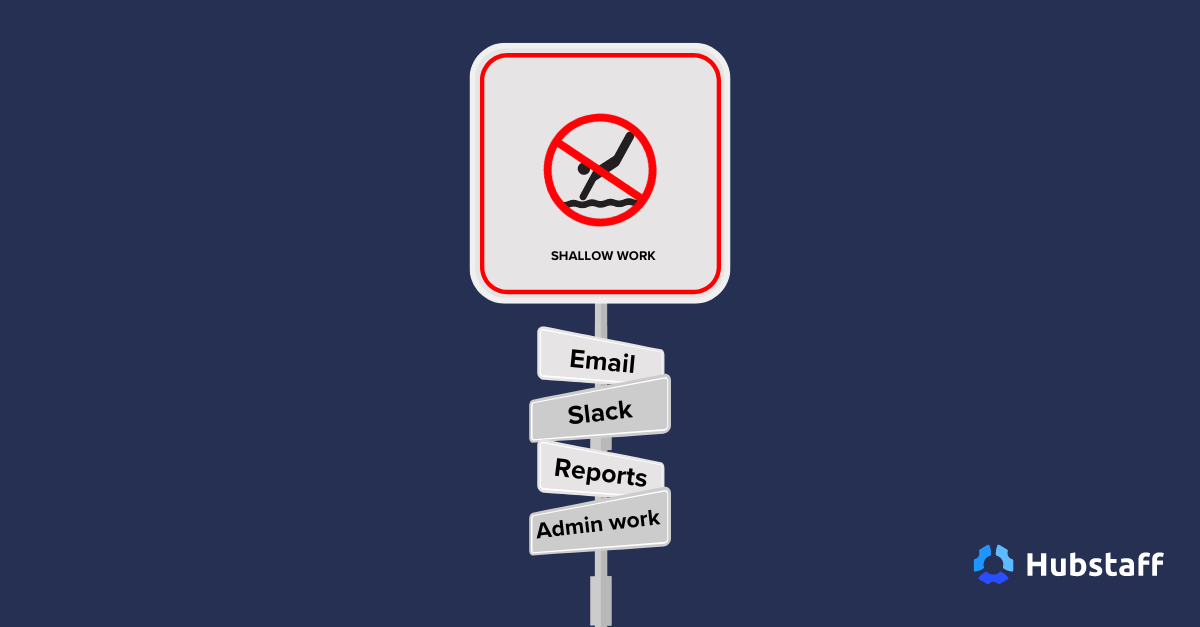
While this work is necessary, visible, and often urgent, it rarely requires full concentration. Deep work creates progress, while shallow work maintains momentum in between. Most workdays blur the two, often at the expense of the first.
How much deep work are employees actually getting?
If you look deeper into focus time, you’ll see that most employees get far less deep work than they think they do.
To understand how much uninterrupted, high-concentration work really happens, we analyzed anonymized data from more than 140,000 workers across 17,000 organizations in our 2026 Global Work Index.
Here’s what we found:
- On average, employees spend about 39% of their tracked time in deep focus (roughly 2-3 hours per day).
- Individual contributors attend around five meetings per week, while managers and team leads attend about 13.
- Employees now average approximately 25 meetings per month, with the majority being recurring.
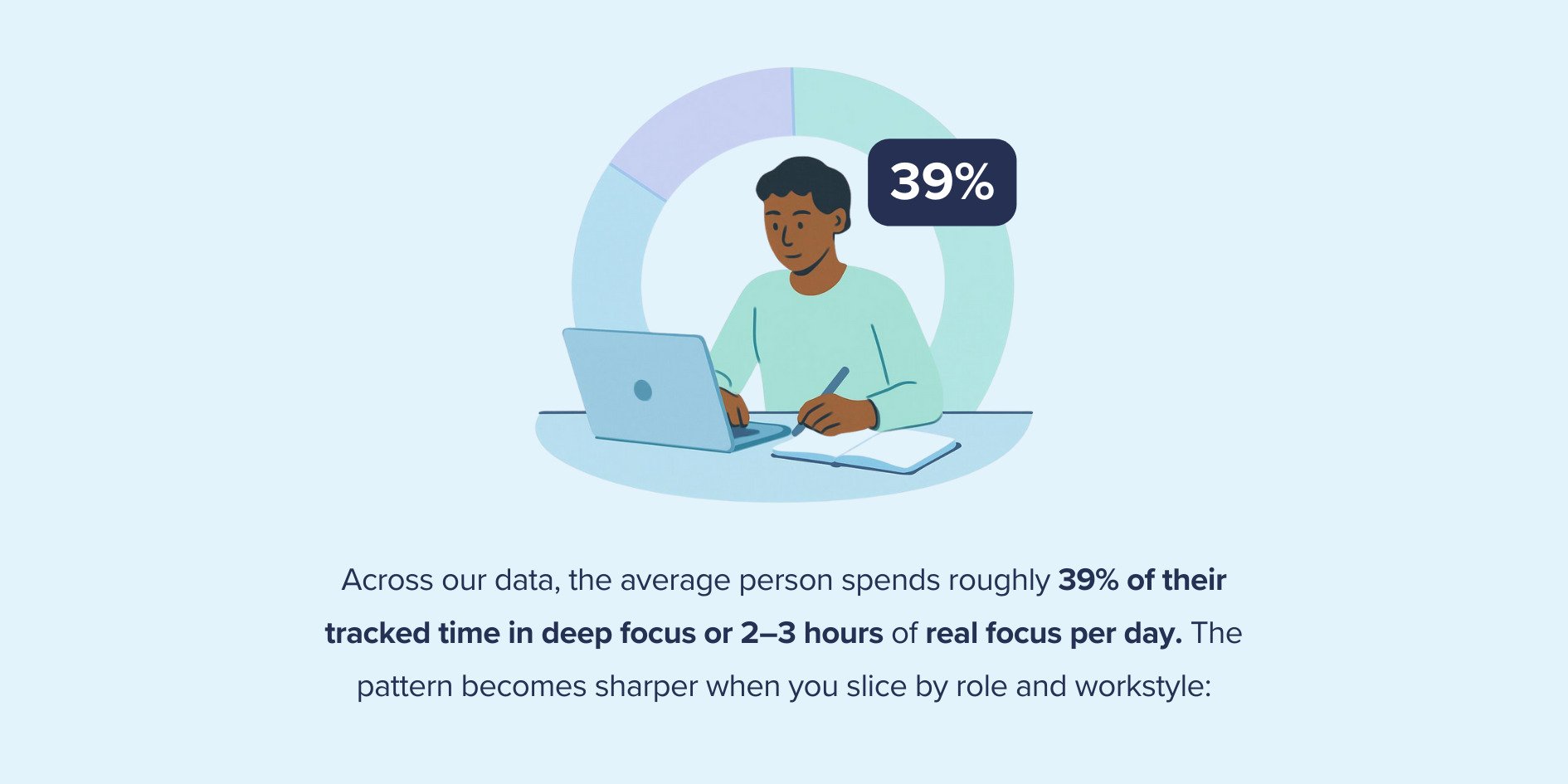
What stands out isn’t any single number, but the pattern these trends create together. Focus time exists, but rarely in the sustained blocks required for complex thinking.
Why deep work is scarce
Deep work isn’t disappearing entirely, but it is being broken into smaller and smaller pieces. That fragmentation is where progress slows. Teams stay busy, calendars stay full, and output plateaus. This happens even as people are working hard, as they work against a system that makes deep work difficult to maintain.
The biggest culprit is interruptions — the everyday ones, to be specific.
Think about it. A message here, a quick check-in there, a calendar reminder popping up just as you were getting oriented… Each interruption pulls you out of context.
Context switching is no small task. If you’re deep into a complex task and step away for a meeting, does that focus really return the moment the call drops? Or do you spend the next 20 minutes retracing your steps and trying to remember what you were thinking before you were pulled away?
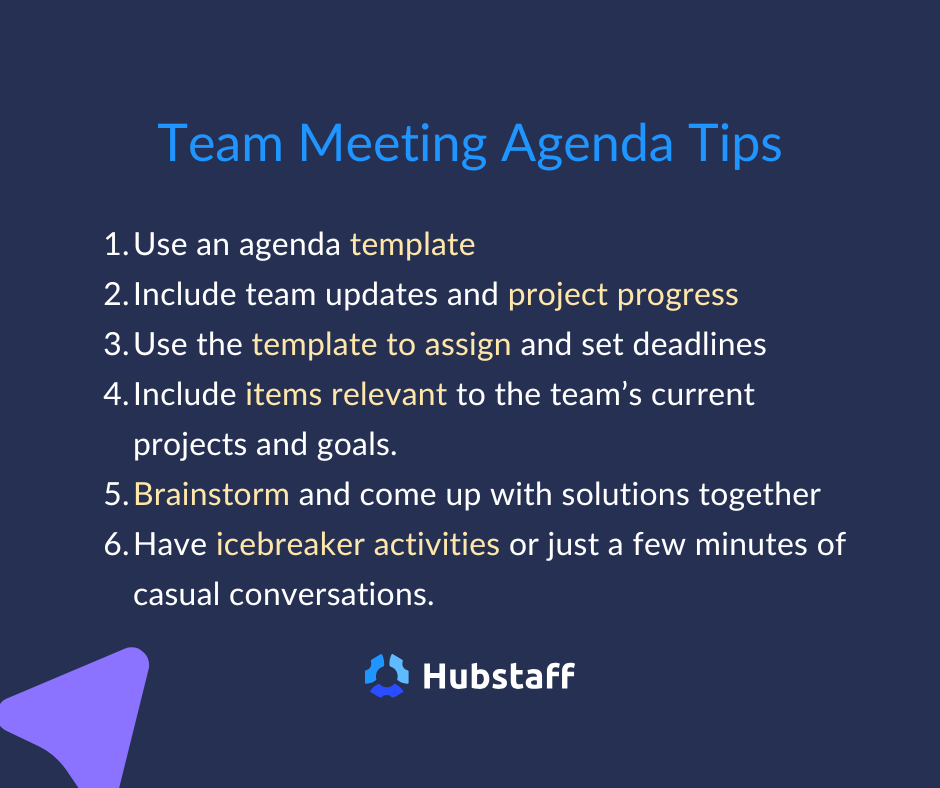
Meetings compound the problem. Many are necessary, some even valuable. But excessive meetings fragment the day in ways hard to see from a calendar view. Even short meetings can break focus if they’re scattered across the day instead of grouped intentionally.
Then there’s the reality of distributed work.
Time zones create overlapping windows that prioritize availability over depth. Someone is always starting their day, ending it, or stuck in between. Without clear boundaries, focus time becomes the first to bend and the easiest to sacrifice.
Impact of technology on employees
When productivity starts to plateau, the response is almost always the same: add another tool.
The logic is understandable. If work feels slow or messy, it’s tempting to assume the problem is missing software. Maybe that’s a more up-to-date dashboard, a cutting-edge AI solution, or a more unified system.
In these instances, teams keep adding tools, expecting performance to rise along with them. In practice, though, the opposite often happens.
Each new tool comes with a cognitive cost. Switching between apps means switching mental frames: different interfaces, different rules, different sources of truth. Every time employees move from one tool to another, they have to reorient themselves with questions like:
- What was I doing?
- Where does this live?
- What’s the next step here?
While it isn’t visible (let alone trackable), that reorientation time adds up quickly, even if each switch only takes a moment.
Over time, sprawling tech stacks create clutter and further fragment attention. Employees spend more energy navigating systems than thinking through the work itself. The result? More motion but less progress.
Technology is meant to support deep work, not compete with it. When tools multiply without a clear purpose or boundaries, they end up doing exactly that.
How to measure deep work
If deep work is the constraint, then it has to be measured like one with the right productivity tracking tools.
Most teams track output and hours, but few track the quality of attention inside those hours. Deep work leaves patterns, though, and once you know what to look for, those patterns become visible.
At a practical level, measuring deep work comes down to a handful of observable metrics:
- Focus time percentage. The share of the workday spent in uninterrupted, productive activity.
- Length of uninterrupted sessions. How often employees reach meaningful stretches of continuous work.
- Meeting distribution across the day. The number of meetings and when they occur.
- Productive times of the day or week. Help identify when natural peak windows emerge.
For example, you might notice that Wednesday mornings consistently produce longer focus blocks, or that afternoons are fragmented beyond repair. That insight changes how you schedule collaboration, how you structure deadlines, and when you protect focused work.
Hubstaff’s Insights add-on is built around spotting and learning from these types of patterns.
Instead of showing raw activity logs, it shows higher-level signals, like:
- Focus time trends
- Time spent in meetings
- Utilization rates
- Unusual activity spikes
- Shifts in work rhythm
More importantly, Insights connects time data to context. You can see when focus hours cluster, when meeting-heavy days hurt concentration, and when after-hours work starts creeping in. This allows you to protect focus hours with intention.
How deep work varies by role and industry
Deep work might be a universally valuable metric, but the way it appears in practice can be wildly different from one team or role to the next.
A sales rep and an engineer can both be high performers while having completely different focus profiles. Expecting their calendars (or their deep work percentages) to look the same is a dangerous move.
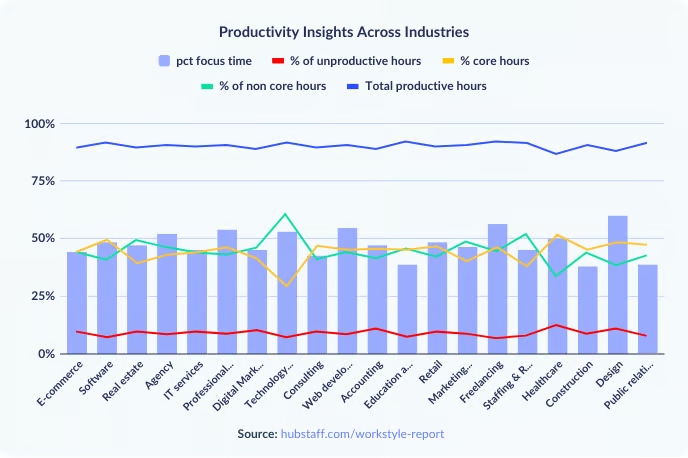
In our survey, we found that high-focus roles such as engineers, designers, and data analysts tend to spend around 40 to 44% of their time in deep focus.
On the other hand, highly collaborative roles like product managers, marketing managers, and founders often fall closer to the mid-20% range, sometimes averaging just 1 to 2 hours of sustained focus per day.
The difference isn’t alarming because it simply mirrors what true, day-to-day work looks like with context.
Some roles require long stretches of uninterrupted thinking. Others require coordination, responsiveness, and constant context-sharing. Both are legitimate.
The problem starts when collaborative roles become so overloaded with meetings and status work that even their limited focus windows disappear. Another example might be a high-focus role like a graphic designer struggling to meet deadlines due to the opposite problem: too many meetings.
Industry adds another layer, too:
- Customer-facing teams operate on tighter response cycles.
- Creative teams move in waves tied to campaigns.
- Technical teams may naturally cluster heavier thinking into certain days of the week.
This is where capacity planning becomes more than a staffing exercise. When leaders understand the natural rhythm of a role, they can set realistic guardrails, like:
- How much meeting load is sustainable
- How much focus time is necessary
- How many hours are necessary before burnout creeps in
Deep work doesn’t need to look identical across your organization. It just needs to be protected in a way that makes sense for the work being done.
Impact of AI on workplace productivity
When productivity starts to plateau, tech stack panic is still very much a thing. Lately, AI has been the tool of choice that teams are looking to resolve productivity issues quickly.
To be clear, AI is useful. In many cases, it’s transformative, even. We even found in our report that AI adoption is high across teams, with 85% of teams embracing the revolutionary software.
Yet, in most cases, it still accounts for only a small fraction of their workday. It shows up in short bursts like drafting a summary, rewriting a paragraph, and generating a quick outline. Helpful, but incremental. However, there’s another layer we often overlook.
AI requires thinking time to use well. Prompting, evaluating output, refining results — these are not passive actions. If the workday is fragmented and reactive, AI will stay shallow. It will remain a tool people “tap” instead of a system they build around.
Successful benchmarks won’t just show high AI adoption. They’ll show a pattern, too: AI usage rising while manual, repetitive work declines, all with focus time remaining protected.
Because AI ultimately doesn’t eliminate the need for deep work. It amplifies it when the conditions are right.
Frequently asked questions
What are common obstacles to deep work?
Frequent meetings, constant notifications, and excessive context switching are the biggest barriers. When the workday is fragmented into small blocks, even capable employees struggle to maintain sustained focus.
How can organizations improve productivity in the workplace?
Start by protecting focus time as deliberately as you schedule collaboration. Streamline tools, reduce unnecessary meetings, and set clear expectations around availability instead of the other way around. Productivity improves when attention is treated as a resource.
How can managers help teams get more deep work time?
Group meetings into defined windows and keep certain hours meeting-free by default. Monitor workload patterns to prevent burnout, especially in highly collaborative roles. Small structural changes often unlock more focus than motivational speeches ever will.
How much deep work should employees get each day?
There isn’t a universal number. Many teams average around 2 to 3 hours of focused work per day, but the healthy range depends on the role. The goal isn’t to hit a fixed quota but to ensure meaningful, uninterrupted time exists.
Does AI reduce the need for deep work?
No. AI can reduce repetitive tasks, but it still requires focused thinking to guide and evaluate its output.
Protect Focus Before You Do Anything Else
If you’re feeling like you’ve hit a productivity wall, the answer isn’t always more tools, more meetings, or longer hours. Instead, it’s often about limiting your tech stack to versatile tools, protecting focus time, and learning more about your team’s day-to-day work.
That’s why we’ve produced The 2026 Global Trends and Benchmarks Report to make those patterns visible. If you’re curious how your team compares — where focus time holds, where it fragments, and what healthy benchmarks look like — the full report offers a deeper look.
Teams don’t always need to do more to achieve more. Sometimes, they simply need to look at what’s already there.
Most popular
7 Tools That Help Monitor AI Usage at Work in 2026
AI is everywhere. Adoption continues to grow, but from monitoring AI usage, we’ve learned that daily use is still a mixed bag, a...
Hidden AI Usage in the Workplace: What Your Tools Don’t Tell You
How much has AI changed your team’s work? On the surface, work might not look that different. The meetings are still there, docu...
How Many Meetings Are Too Many? 2026 Benchmarks by Role
How many meetings are too many? In 2026, the honest and boring answer is: it depends on your role. Our 2026 Global Trends and Benc...
When Evening Work Becomes a Red Flag: How to Fix Triple-Peak Overload with Smarter Core Hours (2026 Data)
Most people don’t remember the first time they worked in the evening, and even fewer people know when the last evening work sess...