Why the Average Worker Gets Only 2-3 Hours of Focus Time Each Day

 4 min read
- Hubstaff's 2026 Global Benchmarks Report, analyzing 140,000+ users, reveals workers average just 2-3 hours of focus time daily, signaling a systemic productivity crisis across all work styles.
- Hybrid teams report the least focus time at 31% of hours, while workers juggle 18 apps daily — proof that more tools and flexibility don't automatically translate to deeper, more effective work.
- AI adoption is rising, but tracked time in AI tools dropped from 4% to 3% year over year, meaning leaders need real workforce data — not assumptions — to redesign workflows and protect focus.

Today’s workers are getting too little focus time: just 2-3 hours per day on average, raising concerns about productivity, burnout, and the limits of AI-driven work.
Focus time: uninterrupted work periods without meetings, messages, or tool switching.
In the 2026 Global Benchmarks Report: Tracking How Work Gets Done, Hubstaff analyzed tracked work time from 140,000+ users across 17,000 organizations, and the data tells an uncomfortable story.
Key findings: What the data reveals about focus time at work
Whether your team is in-office, remote, or hybrid, the findings are hard to dispute: teams are spending too much time on work about work and not enough on the work itself.
- Hybrid teams reported the smallest percentage of deep focus (just 31% of hours), while heavy digital tool use continues to drain attention.
- Managers and team leaders also struggle to carve out time for deep work, averaging just 27% of hours of focus time.
- Despite the hype, tracked time spent in AI tools is not growing.
“Our data proves that teams aren’t failing at productivity, they’re working in systems that constantly disrupt focus,” said Jared Brown, CEO of Hubstaff.
Meetings and focus time: what the data shows
Increased meeting volume and poor scheduling are getting in the way of focus time. Consider this shift:
- The average person is now sitting in twice as many meetings per year.
- The typical organization is running almost six times as many meetings.
Timing matters: Hubstaff data show that roughly a quarter of all tracked meeting time is during peak deep work hours. To make matters worse, nearly a third of that time is outside of standard business hours.
As debates around return to office continue, it’s notable that hybrid teams reported the least amount of focus time, with just 31% of hours in deep focus. Fully committed work styles reported the most focus time, with 41% of hours for remote teams and 45% for in-office teams.
Tool overload and what it means for focus time across roles
If meetings and notifications weren’t a big enough challenge, workers are struggling to navigate an oversaturation of tools that consume their attention and harm productivity through constant context switching.
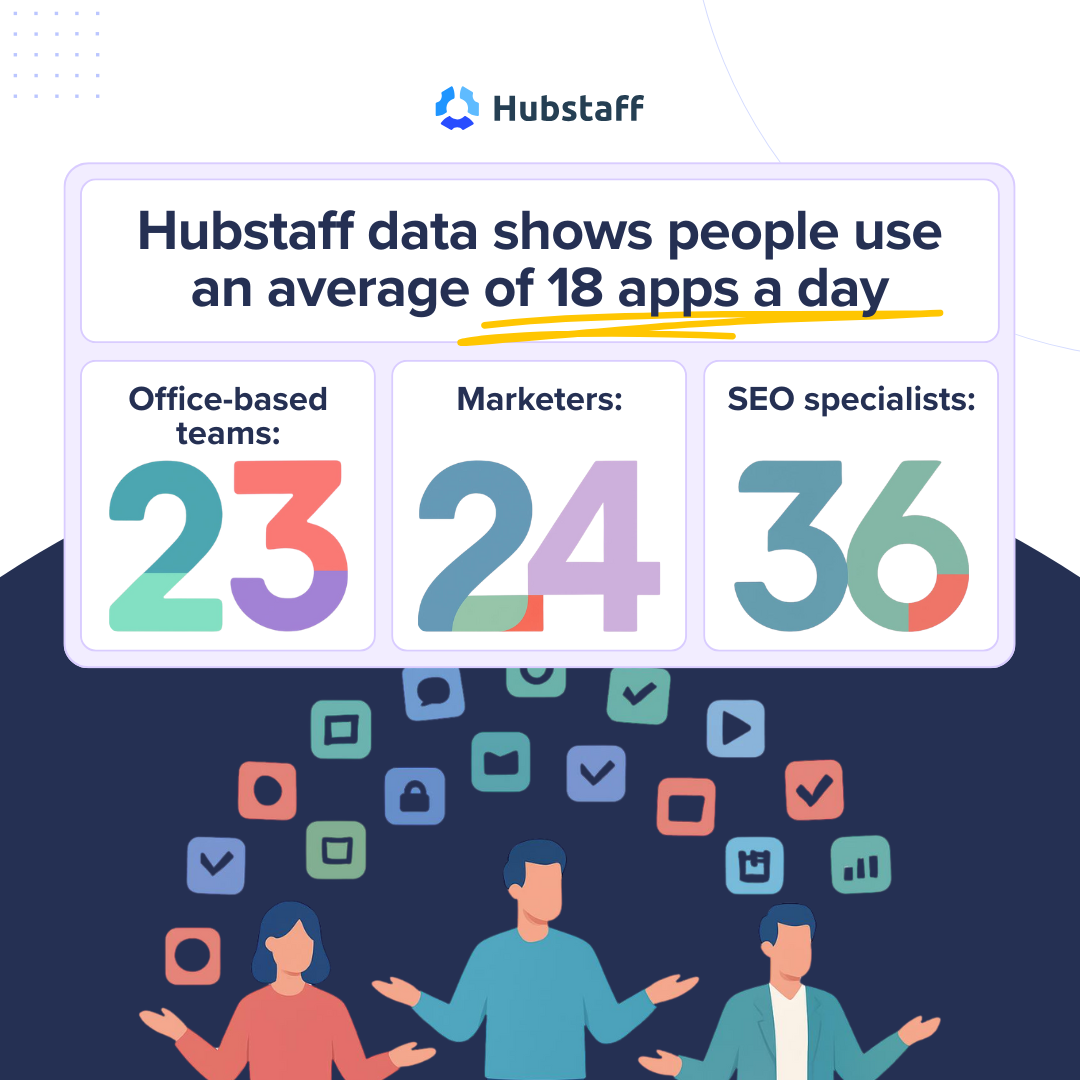
Workers are using an average of 18 apps per day, with higher usage in certain roles:
- Sales and marketing: 21 apps
- Customer success: 20 apps
- Admin and HR: 20 apps
In addition to fragmenting attention, offering more tools has not appeared to make workers more efficient.
AI adoption is rising, but not the time employees track while using it
While AI adoption is up, workers are not tracking more hours using AI tools. Our data shows the share of total tracked time spent in AI apps slipped from around 4% to 3% year over year. This suggests that AI is gaining popularity, but not significantly shifting how workers spend their hours.
AI adoption varies widely by industry and role, but there are notable differences in workstyles:
- Hybrid teams are the only group using AI deeply — and by a huge margin. Usage jumped from ~5% to ~11% of the day in 2025.
- Remote and office-based teams only spend 1-2% of their day in AI apps.
“Business leaders can’t fix focus if they don’t know how teams are spending their time,” said Brown. “Employee time tracking data is the key to diagnosing inefficient workflows and creating a plan to reclaim focus.”
How can I track my employee’s time?
Turning focus time data into action starts with understanding how teams actually spend their work hours. Without clear visibility into meetings, tools, and work patterns, leaders are left guessing where focus is being lost.
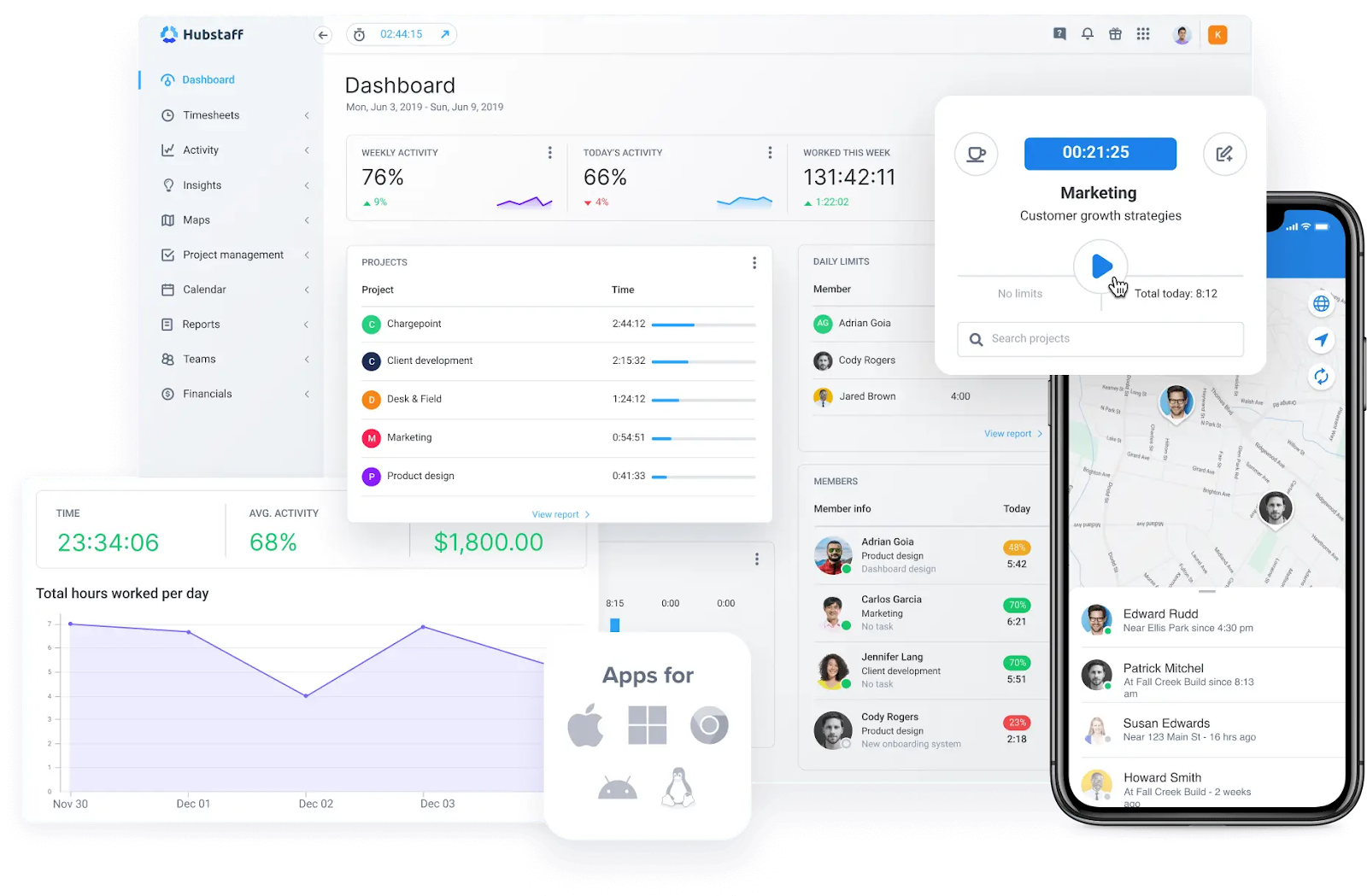
Hubstaff is a time tracking software platform that turns work hours into insights through built-in productivity monitoring, automated payments, and workforce analytics. Time is tracked using desktop and mobile apps that record work activity with transparency and user control.
By analyzing app and website usage, task time, and activity trends, leaders can better understand how work is distributed across tools and workflows — and where changes are needed to protect focus.
Learn more about protecting, focusing, and increasing productivity
The 2026 Global Benchmarks Report: Tracking How Work Gets Done explores six critical shifts in tracked time and offers leaders a live “operating system for global work” so they can redesign rhythm, protect focus, streamline tools, embed AI, and catch 50+ hour weeks before they burn people out.
This release follows Hubstaff’s research in the following areas:
- More Profit, Less Burnout: How Smart Agencies Scale
- The AI Productivity Shift
- Workstyle Revolution: Debunking Myths and Unlocking Distributed Team Potential.
Subscribe to the Hubstaff blog for future reports and blog content on time tracking, productivity, AI, workforce analytics, and more.
Most popular
The Top Time Management Statistics in 2026 for Workplace Productivity
We all have the same hours in the day. But when employees struggle to focus, those hours likely won’t be used effectively. Witho...
The Best Coaching Conversations Start With Productivity Data
Most coaching conversations happen too late. A deadline is missed, or a client flags a problem, and then a manager schedules a sit...
A Quick Guide to Work Order Management
From quick fixes to long-term stability, work orders are crucial to asset management and helping managers keep operations running...
How to Identify High Performers Using Work Patterns
Every business has top performers, and managers are told to find them all the time. But in most cases, they default to approaches...